Marie-Barbe Loiselle, a heroine of the defence of Quebec in 1775
Marie-Barbe Loiselle, also known by her nickname “Baboche” or as “Élisabeth,” was one of the few people to receive a British army pension in 1778 after the siege of Quebec by the American Continental Army in 1775-1776. Who was this key figure of the town’s defence?
A Quebec resident caught up in the war
Marie-Barbe Loiselle was born on October 2, 1750. Her parents, Charles Loiselle and Marie-Joseph Pépin, were married in Charlesbourg in October 1746, and this village was quite likely her place of birth. But she did not live there for long.
In early 1751, the Loiselle family acquired a lot in the district of Saint-Roch, which was then expanding. In the early 1750s, different people bought more than 70 lots belonging to Henri Hiché and lying between the Promontory of Quebec and the Saint-Charles River. An attorney of the Provost Court and a former royal notary, Hiché still owned the Maison Blanche, a large stone structure in the district and still standing in Quebec City today. It had been built from 1678 onward by Charles Aubert De La Chesnaye, a leading trader in the town of Quebec. In addition to these new properties, there were already several buildings on Rue Saint-Vallier, including tanneries in operation since the early 18th century.
The same period brought big changes to the Loiselle family. In 1756, Marie-Joseph Pépin, Baboche’s mother, died. Charles Loiselle soon remarried with Marie-Marguerite Bourret, and his family continued to grow in their lower-town home. This quiet family life was short-lived. New France had been at war with Britain since 1754, and after the capture of Louisbourg in 1758 the inhabitants of Quebec knew it was just a matter of time before their town came under attack.
In the summer of 1759, the young Marie-Barbe Loiselle was only 8 years old when the British began to bombard Quebec. Starting in the night of July 12 to 13, 1759, the bombardments lasted through the summer and destroyed a very large part of the town. British batteries pounded the town from their emplacements at Pointe-des-Pères, on the south shore. By late July, French observers reported bombs falling as far as the Saint-Roch district:
In August, with the British having just set up a third battery on the south shore, Saint-Roch again took a severe hit. Several homes were “crushed” amid reports of the death of at least one child and serious injuries to one woman. During the summer, the British had four artillery batteries in place—a total of 20 cannons and 13 mortars firing over 18,000 shells, not to mention the ones fired from their ships.
The British captured the wrecked town following the Battle of the Plains of Abraham (September 13, 1759), and France would finally cede Canada to Great Britain by the Treaty of Paris (February 10, 1763).
The young Baboche would now be living in a British colony.
Baboche during the siege of 1775-1776
In the summer of 1775, Baboche was 24 years old. She had lived in the town of Quebec since the Conquest and was, at least briefly, in a relationship with a local man whose name is unknown and who never married her. This relationship may have been for practical purposes only. With the Quebec Act reestablishing French Civil Law in 1774, Baboche would not be considered an adult until she turned 25. Under British law, she became an adult when she turned 21 in October 1771. Not until October 1775 would she once again reach the age of majority. At this time, Lieutenant-Governor Hector-Théophilus Cramahé was already imposing different restrictions on Quebec’s residents: control over movement within the town, closure of the town’s gates at night, and mobilization of men of fighting age.
On November 14, an initial detachment of Continental Army soldiers reached the Plains of Abraham and demanded the surrender of Quebec. The town was on high alert. The British governor, Guy Carleton, had come back several days before, as had a military officer, Lieutenant-Colonel Allen MacLean. They now took the town’s defences in hand and continued the work begun by Cramahé earlier during the summer and autumn.
Without knowing precisely what drove her to act as she did, we can imagine that Baboche did what many of her town’s inhabitants chose to do—defend their homes, their neighbourhoods, and their community against an external invader. This choice was easier for them than it was for the inhabitants of the surrounding countryside, who either supported the Continental Army or waited to see how the invasion panned out. Since September, a Canadian militia of nearly 1,000 people had joined the British militia of 300, who had been carrying out exercises since July.
We know little about her direct involvement during the months when the Continental Army was at the town’s gates. Some British sources mention the comings and goings of a young woman used as a messenger. The sources of the Thirteen Colonies also report that their side captured a “Mademoiselle Baboche” in January, although she managed to escape several days later. Baboche was alive when the troops of the Thirteen Colonies left.
One thing is sure. In 1778, she belonged to an exclusive group of three people who received a British army pension. The other two were the widow of a militiaman and an artilleryman. She alone was neither a combatant nor the surviving spouse of one—a clear sign of her strategic importance to the British.

Aftermath
We know just as little about the fate of Marie-Barbe Loiselle after the war. A few details may be gleaned from bits and pieces of information.
First of all, she seems to have been pregnant during the siege of Quebec. Her first daughter, Marie-Josephte Magnan, was born in March 1776 before the Continental Army left the region. Did the British army give her a pension because of this pregnancy and the information she provided? Good question. In 1795, Marie-Josephte Magnan married the merchant ship captain Louis Ruel in the town of Quebec. After his death, Marie-Josephte married her second husband Narcisse Faribault in Berthier-sur-Mer, in October 1825.
Meanwhile, Marie-Barbe Loiselle went through a troubling episode. In 1779, she was declared to be “of unsound mind,” and her uncle tried to find someone to care and provide for her. This quandary did not last long. In September 1780, she gave birth to an illegitimate son before settling down with another man. The last quarter of her life was spent with James Tod, a Scottish merchant and a politician elected in 1792 to the colony’s first legislative assembly for the county of Devon (L’Islet). With him, she had a daughter, Charlotte, in 1782. Charlotte’s story was tragic. Having moved to the south shore, she would die in 1855 at the hands of her son-in-law, Jean-Baptiste Corriveau. For this, he was hanged in September 1856. His story probably contributed to the malevolent aura surrounding the name “Corriveau,” according to anthropologist Luc Lacourcière. In the same region, Marie-Josephte Corriveau had murdered her husband in 1763.
Although she never married, Baboche would share her life with Tod until his death in 1816. Marie-Barbe Loiselle was 67 when she died in the town of Quebec on October 17, 1817.
A life story uncovered through local detective work
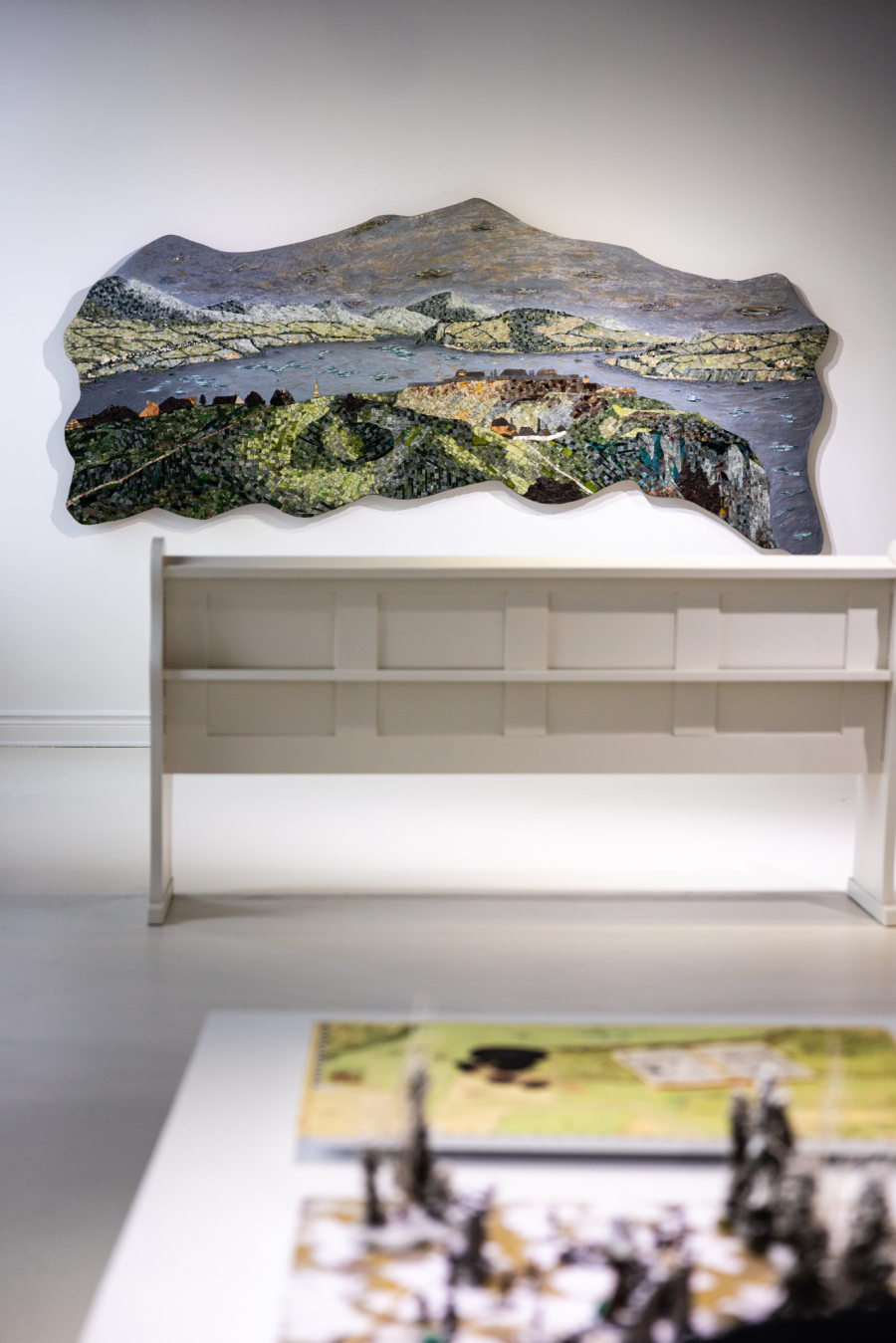
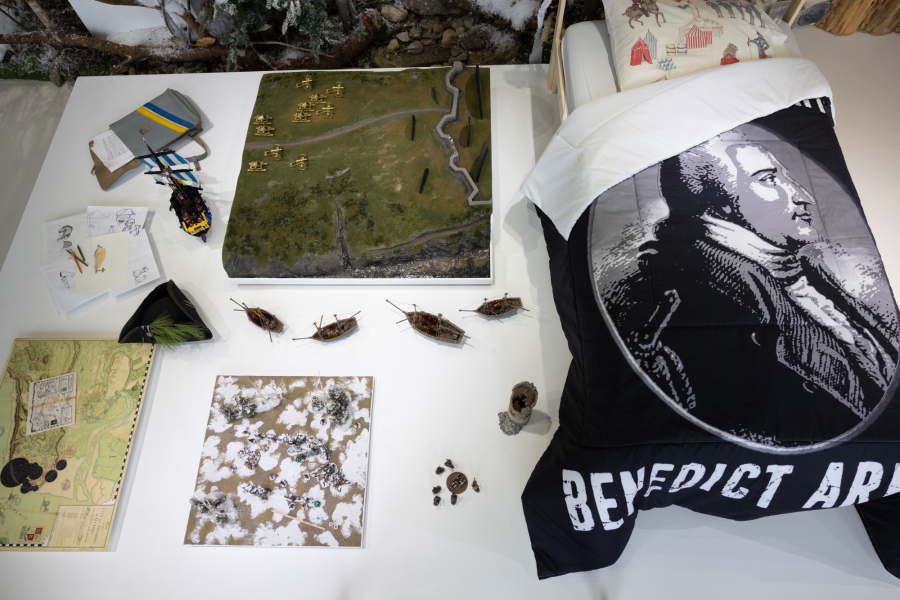
Baboche’s story was presented to us by Quebec City historian, José Doré. A former tourist guide, José has done much research on the Continental Army’s invasion of 1775-1776 and on the response by the inhabitants of the town of Quebec. Fascinated by her story, he likens her heroic participation in the events of 1775-1776 to that of Laura Secord in those of the War of 1812. José worked with the museum staff on the exhibition Québec 1775: Blizzards and Battle, which will be presented at the Plains of Abraham Museum until January 11, 2026.